Meet Luminous — your future planning advisor
Luminous provides high-end analysis that uncovers inborn talents, skills potential, personality, learning style, parenting approach and career direction. Personalised reports and expert consultation turn that into self-discovery, growth and decisions you can stand behind.
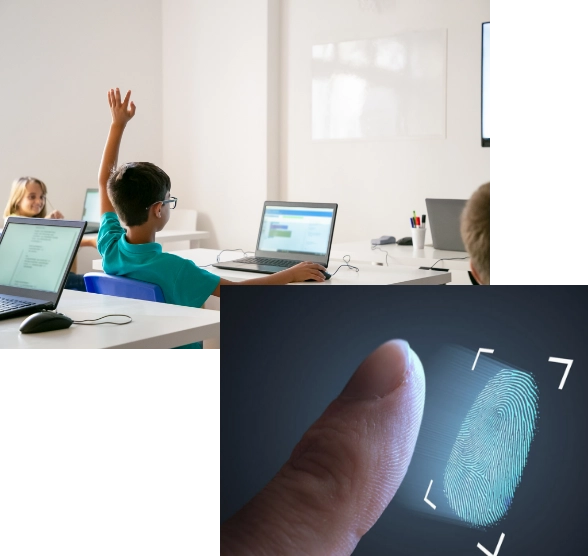
A guiding star in personalised EduTech solutions

Luminous exists to change how education and development decisions get made. Our tagline — Personalised EduTech Solutions — describes work that reaches individuals, parent-child relationships, schools and corporate organisations alike.
The foundation is neuroscience and biometric research. Within a person’s biometric markers there is a readable pattern: how they take in information, what they are naturally drawn to, and the traits that shape how they operate. We read that pattern and give it back to you in plain language.
What follows is the part that matters. Through expert consultation and personalised assessment, we build approaches that fit the actual situation — a specific family, a specific classroom, a specific team — rather than handing over a generic profile and wishing you luck.
With our Personalised EduTech Solutions, we intend to lead a new era in education and management — giving society the benefit of lifelong learning and real transformation.
Three commitments we hold ourselves to

Empowering through biometric technology
Reveal distinct talents, learning inclinations and personality traits — so you can shape your own narrative rather than inherit someone else’s assumptions about you.

Tailored strategies for lifelong success
Build bespoke solutions for parent-child relationships, educators, employees and corporate partners, aimed at releasing innate potential and improving learning outcomes.

Guiding growth at every turn
Stay with you through the journey. We are committed to nurturing capability, supporting growth and providing solutions that still hold up years later.
About dermatoglyphics
Half a century ago, scientists found a correlation between ridge patterns and multiple intelligences, drawing on genetics, embryology, dermatoglyphics, neuroscience and neurology. Through observation, recording, comparison and the integration of clinical experience, it was confirmed that multiple intelligences and potential personality traits can be read from those patterns.
Dermatoglyphic analysis is a way of deciphering the codes of the brain — an instruction manual you were issued at birth. The earlier you understand it, the earlier you can act on it.
How the field got here
From the first classification of ridge patterns to the assessment tools used across Asia today.
Purkinje classifies the patterns
A professor of physiology, John E. Purkinje, published a thesis describing nine types of ridge pattern. He did not yet mention their value for identifying a person.
Herschel puts prints on contracts
Sir William J. Herschel was the first to adopt prints on international contracts as an official signature in India. He published The Origin of Finger-Printing in England in 1916 — the first published account of the practice.
Faulds writes to Nature
Dr Faulds published an article in the scientific journal Nature suggesting that prints could be used as evidence at crime scenes.
Galton publishes Finger Prints
Francis Galton, an English anthropologist and cousin of Charles Darwin, proposed three basic pattern categories. His research put the odds of two identical prints at one in 64 billion. The method he established is still in use, and led the US Congress to form the FBI identification department.
The term “dermatoglyphics” is coined
Dr Harold Cummins and Dr Charles Midlo created the scientific term dermatoglyphics — from the Greek derma (skin) and glyph (carving).
Finger Prints, Palms and Soles
Cummins and Midlo collaborated on the book that became the standard introduction to the field.
Spier studies children’s development
Dr Julius Spier published The Hands of Children, using the method to analyse the mental development of children.
Lejeune links patterns to chromosomes
French geneticist Jérôme Lejeune identified the cause of Down’s syndrome — an extra chromosome on the 21st pair — and noted that affected children showed different ridge features. This established that ridge patterns can indicate chromosomal abnormality.
First international conference, UK
The principles of classification — the triradius and the number of differentiating pattern types — were confirmed at the first international research conference on dermatoglyphics.
Used to select athletes
The Soviet Union adopted dermatoglyphics as one method of identifying athletic potential.
Sperry wins the Nobel Prize
Roger W. Sperry received the Nobel Prize in Medicine for his work on split-brain theory — the basis for understanding how the two hemispheres divide their work.
Gardner proposes Multiple Intelligences
Prof. Dr Howard Gardner developed the theory of Multiple Intelligences. Around the same period, a Japanese medical professor pointed out that the fingers are closely related to the brain hemispheres.
Chen Yi Mou brings the two together
Dr Chen Yi Mou published research applying dermatoglyphics to Gardner’s Multiple Intelligences theory, then introduced the field to Taiwan and began categorising Asian ridge patterns — opening a new chapter for the region.
ADRC and regional practice
Asian Dermatoglyphics Research develops computer-assisted assessment and profiling. Application in profiling is now available in Malaysia, Singapore, India, Vietnam, Thailand, the Philippines, Nepal, Dubai, Bahrain and Australia.
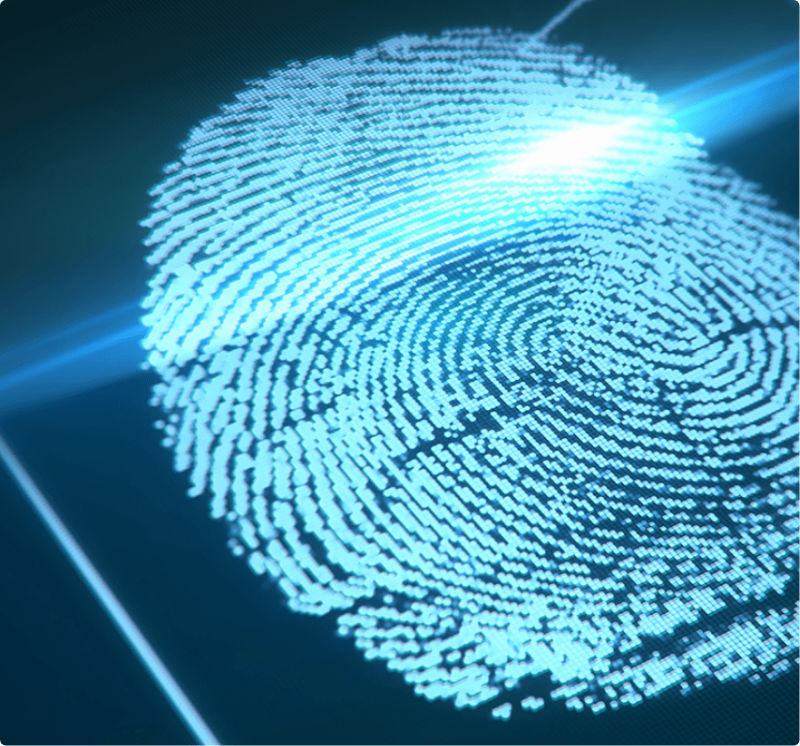
Every pattern is unique — and it never changes
Every person carries a distinct set of ridge patterns, and that network stays the same from birth to death. Pattern type, ridge height, density, quantity and point location all vary from one person to the next — which is exactly what makes the reading stable, and why one assessment lasts a lifetime.
How we analyse
Digital capture keeps the reading consistent — it is far easier for a device to record a known state precisely than to reproduce a continuous range by hand.
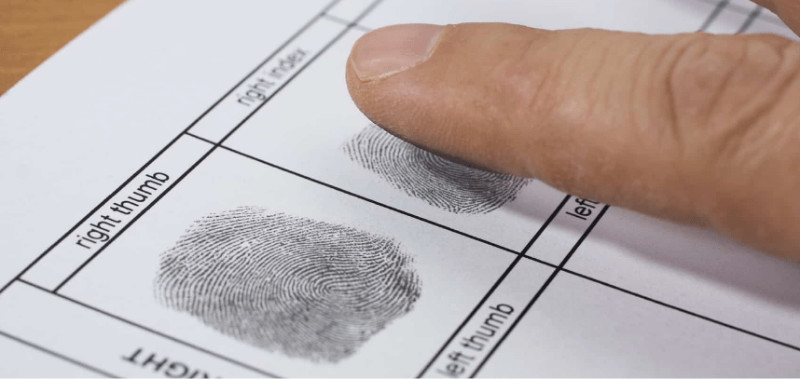
Collection
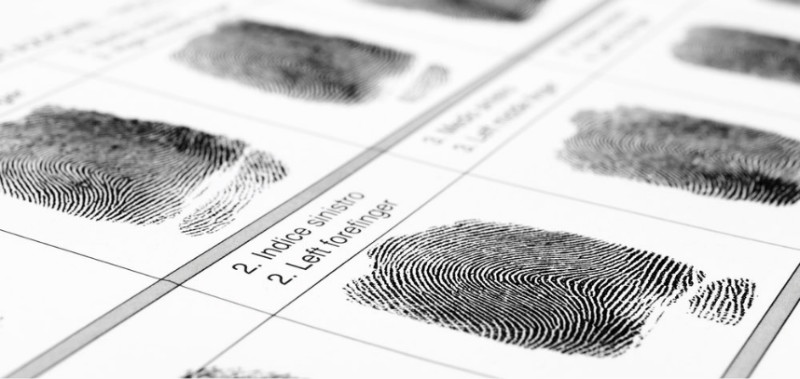
Ten prints are captured with a digital scanner. Nothing invasive, and it takes about ten minutes.
Analysis
Pattern type, ridge count, density and point location are read against the classification model. Digital capture keeps the reading consistent rather than subjective.

Report and consultation
A certified consultant goes through the report with you and turns it into decisions you can act on.
Recognised and registered



Find out what yours actually says
Your hidden strengths are waiting to be uncovered — seize the opportunity to unlock your full potential now.